
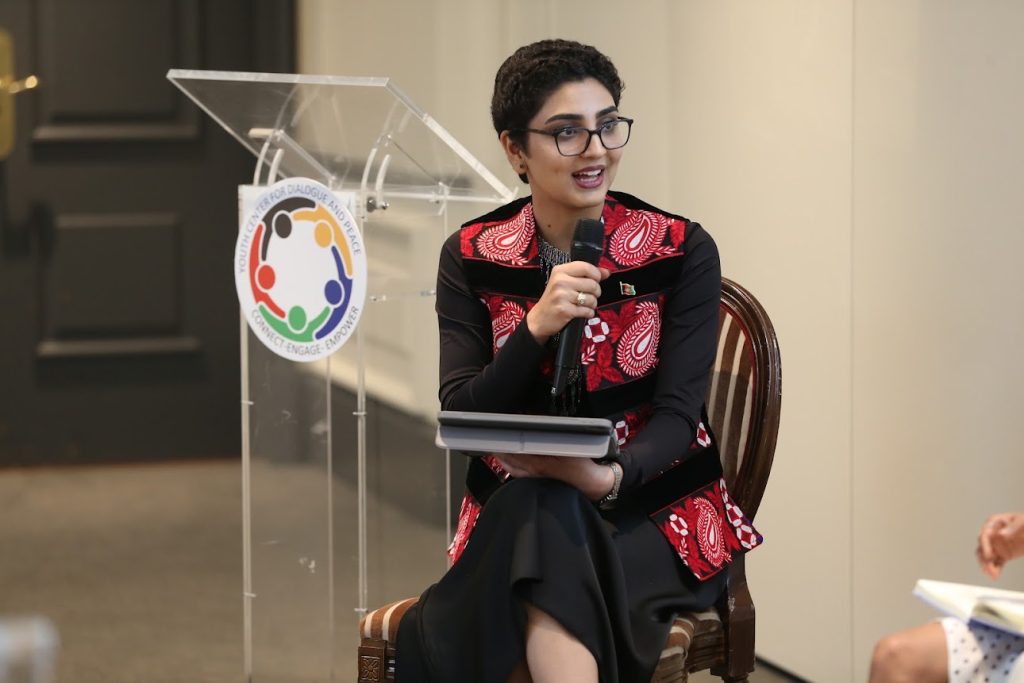
Three minutes. That was all each participant had to present a solution to a problem they saw in the world.
Raihana Sattari was in Geneva, surrounded by young people from around the world with a range of experiences and ideas. It was the second day of the Global Youth Summit for Change, and the group had gathered at the United Nations headquarters for a 180-second solution pitch.
Of everything Sattari heard, one participant’s message stayed with her. “Do not average everything.”
It sounded like a simple phrase, but Sattari kept thinking about what it meant: A problem can look universal on paper but feel completely different in individual lives. Numbers can show the scale of a problem without explaining the people behind them.
“We cannot assume that one solution or one understanding represents everyone,” Sattari said. “We have to listen to people individually and understand the realities behind the numbers.”
For Sattari, the idea resonated beyond the summit.
She is an Afghan woman studying mechanical engineering at Texas A&M University at Qatar through the Qatar Scholarship for Afghans Project (QSAP), which provides scholarships to Afghan students whose education was disrupted following the fall of Kabul.
While her academic work centers on engineering, she has also developed a growing interest in youth leadership, advocacy and public dialogue. That path brought her to Geneva in August.
Sattari was already familiar with speaking before large audiences. In 2025, she addressed nearly 3,000 people as a panelist during the closing plenary of the NAFSA: Association of International Educators’ annual conference in San Diego. In Geneva, however, her role was not only to contribute her own perspective, but to help others share theirs.
As a moderator, she guided discussions, responded to speakers in real time and helped ensure different voices had room in the conversation. Behind the scenes, she also worked with the organizing team to bring together young leaders, speakers and professionals.
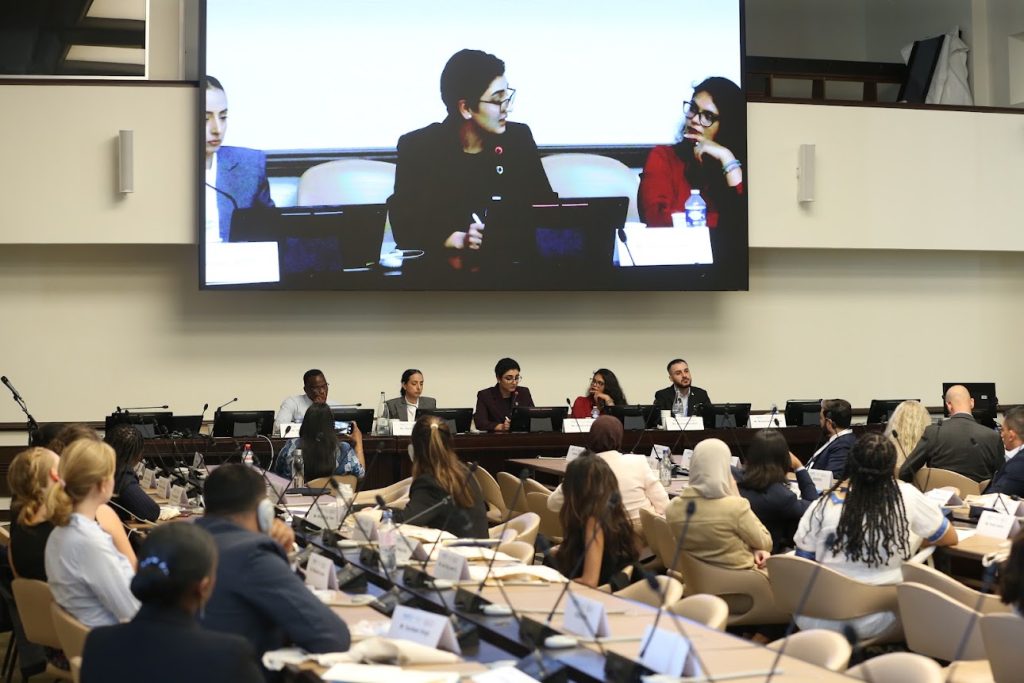
More than a seat in the room
Over four days, the Global Youth Summit for Change brought together more than 100 young people and experts for conversations around peacebuilding, climate action, human rights, social innovation and global governance.
The experience brought Sattari back to a question she has been thinking about through her own work: What happens after young people are invited into the room?
“I am particularly interested in the question of how young people move from simply being invited into a room to actually having a meaningful voice in that space,” she said.
Sattari has experienced that progression herself, from a student in the audience to a speaker on stage and, in Geneva, a moderator helping guide the conversation. While moderating two youth-focused panels, she also brought her perspective as a young Afghan woman into the discussions.
“Being Afghan is a part of me that I carry into every space I enter,” Sattari said.
For her, representing Afghanistan means speaking about what is happening to women and girls who have been denied access to education. But she does not want those restrictions to become the only story international audiences hear about young Afghans.
“We also have ideas, ambitions, leadership and so much that we want to contribute,” she said.
QSAP has given Sattari the opportunity to explore those possibilities. By providing the stability to continue her education in Qatar, she said, the scholarship has also allowed her to pursue opportunities beyond her degree.
“One of the most valuable things for me has been having the space to pursue opportunities outside the classroom, whether through leadership, international conferences, community work, research or youth initiatives,” she said. “Those experiences have helped me understand that education is not only about completing a degree. It is also about discovering where you can contribute and what kind of person and professional you want to become.”
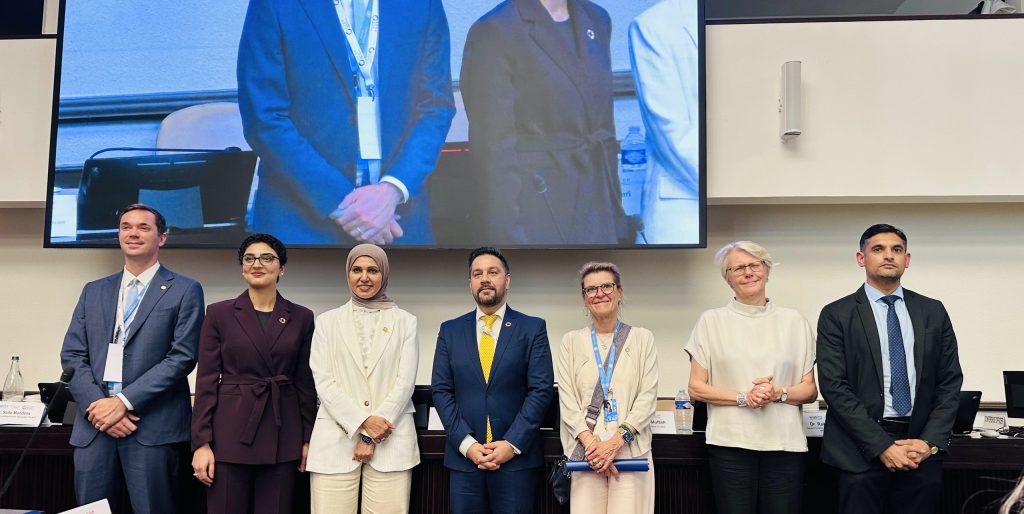
Who is missing from the table?
After Geneva, Sattari returned to her engineering studies and her work with the Youth Center for Dialogue and Peace. But one idea from the summit stayed with her: Young people do not need to wait for a certain title, age or position before their experiences and perspectives have value.
“You do not have to wait until you have a certain title, age, or position to contribute,” she said. “Young people already have experiences and perspectives worth listening to.”
The lesson also comes with a responsibility to look beyond who is already part of the conversation and consider who has been left out.
“When I have a seat at a table,” Sattari said, “I also think about whose voice may still be missing from it.”
About QSAP
The Qatar Scholarship for Afghans Project is a fully funded scholarship program that supports Afghan students whose education was disrupted after the fall of Kabul. It is a partnership among the Afghan Future Fund, the Institute of International Education, Education Above All and the Qatar Fund for Development.
The program works with more than 80 universities worldwide and has enrolled more than 500 Afghan students to date, about half of whom have graduated.
