
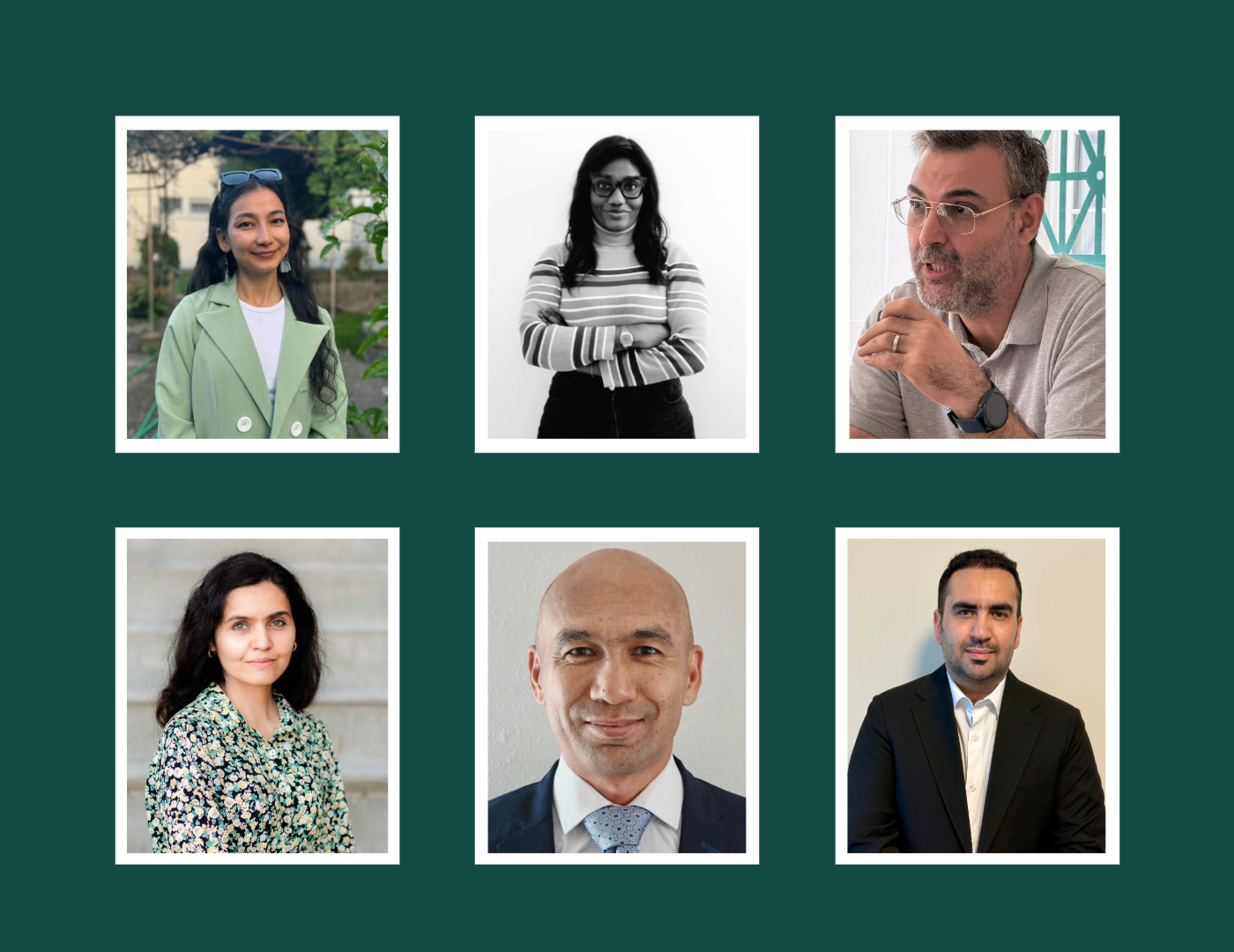
Afghan Future Fund (AFF) has awarded six refugee-founded ventures with seed grants through its cooperation with Ventures Beyond Borders (VBB), an initiative incubated by AFF. These grants, of up to $10,000 each, empower displaced founders who are using innovation, creativity and technology to rebuild their lives and help others do the same.
Entrepreneurship is one of AFF’s core pillars, offering pathways for displaced Afghan talents and other refugees to achieve self-reliance and community impact. Together with VBB, AFF provides early-stage funding, mentorship, incubators, and access to global networks for founders building solutions that uplift communities across the globe.
Below are the inspiring startups supported through this round of seed funding:
FitIQ: connecting customers with refugee tailors through technology
Yasamin Ebrahimi, an Afghan refugee in Portugal, joined VBB’s fall Accelerator in Berlin this year to launch FitIQ—a digital platform that connects customers with talented tailors from immigrant and refugee backgrounds.
Many skilled artisans, particularly refugee women, face barriers to employment and lack digital visibility despite years of experience in custom garment design. FitIQ bridges this gap, making custom tailoring accessible, affordable and sustainable while creating dignified income opportunities for refugee tailors worldwide.
Grantora: breaking language barriers in nonprofit funding
Rezk Issa, a Syrian refugee in France, founded Grantora, an AI-powered SaaS platform that helps small, local NGOs write donor-ready proposals and reports in their own language.
In many parts of the Global South, refugee- and women-led organizations struggle to access funding because proposals must be written in English and follow complex donor templates. Grantora removes those barriers by allowing users to input ideas in Arabic and automatically generate complete, professional proposals in English. By doing so, Grantora empowers grassroots organizations to compete for international funding.
Howly: turning complicated manuals into smart, multilingual guides
Founded by Adam Taheri in Houston, Texas, Howly transforms outdated product manuals into AI-powered, voice-enabled, multilingual guides that make technology easier to use for everyone— especially immigrants and refugees adapting to life in a new country with language barriers.
By turning complex instructions into interactive, conversational tools, Howly helps families and small businesses save time, reduce frustration and gain confidence using everyday devices. The startup bridges the digital divide by making technology accessible in any language, anywhere.
HEMOFAB: protecting dialysis patients through innovation
Bonney Magambo, a refugee entrepreneur from Rwanda, is the founder of HEMOFAB, a medical device company based in Lyon, France. Drawing on her background as a nurse and her own experience with kidney failure, Bonney set out to improve care and quality of life for dialysis patients worldwide.
HEMOFAB’s flagship innovation, the FAV Protector, is a comfortable, protective sleeve designed to shield a patient’s arteriovenous fistula—the lifeline used during dialysis—from bumps, infections and bleeding after treatment. By improving comfort and protecting this critical access site, HEMOFAB helps patients maintain their independence and peace of mind between sessions.
Her goal is to make the device widely available, enabling safer, more dignified dialysis care around the world. “My experience as a refugee taught me resilience, adaptability and perseverance—qualities essential for any founder,” Bonney says. “Facing deep uncertainty strengthened my ability to overcome challenges, stay focused on solutions and lead with empathy and determination.”
Shamlla: empowering refugee women through sustainable fashion
Based in Wisconsin founded by Sarwat Najib Azad, Shamlla is an eco-conscious fashion brand founded by Sarwat Najib Azad, dedicated to empowering refugee and immigrant women through sustainable, handcrafted clothing.
Shamla addresses two key challenges—environmental sustainability and economic opportunity. The company provides refugee women with fair income, skill development, and a sense of belonging while promoting ethical, environmentally friendly fashion.
Vital Tech Solutions: building inclusive technology for smarter public services
Founded by Afghan immigrants, Fazalhaq Aslami and Mohammad A. Yadgaari, in Virginia, VTS uses technology to make public services more efficient and inclusive. Their flagship product, QueSync, is a cloud-based queue management system designed for hospitals, DMVs, banks and government offices.
QueSync streamlines operations, reduces wait times, and uses AI-powered translation and voice-assistance features to make public services accessible to everyone including those facing language barriers. Beyond the product, VTS also mentors skilled refugees and immigrants, helping them rebuild their professional careers and re-enter the workforce.
Building Futures Beyond Borders
Many refugee entrepreneurs have brilliant, practical ideas born from experience, but they often lack the resources or connections to bring them to life.
Together with VBB, AFF helps bridge that gap. These small grants give founders the chance to test their ideas, build something tangible, and start creating social impact in their communities. It’s not just about launching a business — it’s about giving people the support to rebuild, to start again, and to turn resilience into something that helps others thrive.
To learn more about VBB, visit the website.
Address: Rockefeller Philanthropy Advisors
169 Madison Ave
New York, NY 10016
© 2025 Afghan Future Fund. All rights reserved